Does my 9-year-old need to start a skincare routine? Is it safe for my 8-year-old to wear deodorant? We get asked these questions so often, we thought it was time to do some age-specific guides. This is the first and we’re starting at the beginning: putting the focus on the early tweens and what is happening to their skin, bodies and brains as they head towards puberty.
Of course we’re also going to talk about what products are suitable for their skin. And lay out the simple routines they can follow as they learn to take care of themselves independently.
Welcome to Skin School (the mini edition)
The early tween years are what we like to think of as the “set-up” phase. The skin of an 8 to 9-year-old is still mostly childlike: it’s thin, easily irritated, and not very oily. But behind the scenes their body is quietly booting up the puberty programme. For a few tweens this might mean the very first signs of change - perhaps they’ll get a tiny bump here and there; or a slightly shiny t-zone. Maybe they’ll come home from school smelling a little sweaty.
Where skin and body-care are concerned, the goal now is to keep everything gentle, predictable and kind, so good habits feel as normal as brushing their teeth.
What’s happening to skin at this age?
Child skin first, teen skin later
Despite what Tiktok might be telling them, an 8 to 9-year-old still has the skin of a child. What does that mean, exactly? As well as looking peachy-gorgeous, children’s skin is a larger proportion of their bodies than an adult’s skin, with a higher water content, thinner epidermis and more fragile skin barrier.
Young tweens also secrete less sebum than adults, which makes their skin much more susceptible to synthetic chemical penetration from haircare, skincare and bathing products.
So, why do some young tweens get a bit of ‘teen skin’? Although the sebaceous glands are largely inactive through childhood, they can be among the first tissues nudged by puberty hormones - for some children this happens as early as age 8 or 9. That’s when you might notice mild T-zone shine or occasional black/whiteheads, usually small and non-inflamed.
What’s happening to their bodies?
Pre-puberty is starting in the background
Even before any outward changes, the brain begins puberty’s “start-up sequence”. The hypothalamus pulses Gonadotropin-releasing hormone (GnRH), which triggers Luteinising Hormone and Follicle Stimulating Hormone (LH/FSH) from the pituitary - low-key signals that are telling their bodies to get ready…
Body odour: maybe, maybe not quite yet…
Most 8 to 9-year-olds won’t smell very different from their smaller selves. But it’s not uncommon for young tweens to have body odour, long before other signs of puberty appear. The reason: their apocrine sweat glands are beginning to wake up. And when bacteria starts to break those sweat proteins into stronger-smelling compounds, your sweet tween will get stinky.
The interesting part is, their sweatiness will often be intermittent. They’ll be stinky one day, then smelling like a flower the next. Either way, when odour appears, it’s normal and fixable with smart washing and (if needed) a gentle deodorant.
What’s happening in their brains?
Big wiring job incoming
Here’s the incredible thing: right before puberty there’s a burst of new brain development. White matter, which are the connection pathways in the brain, increase steadily. So does grey matter, with a young tween’s experiences shaping and pruning these areas on a ‘use it or lose it’ basis.
What this means is that, at 8 to 9, simple, repeatable routines and rituals help children feel anchored as all these huge changes approach. A good sleep routine and calm wind-downs before bed are more important than ever. It’s also a good time to introduce simple skin and body routines…
The right routine (keep it simple)
The early tweens is a time of growing independence. 8 to 9 year-olds usually want to take ownership of their morning and night time routines. They don’t want a parent overseeing bath time any more or brushing their teeth.
This is the perfect moment to introduce some self-care habits. And a simple skincare routine is a good start. By simple, read pretty basic. It’s about caring for the skin and prevention - washing it gently, treating the odd pimple, moisturising, if needed, and that’s it.
Encourage them to think of it in the same way they think of brushing their teeth - something they need to do daily. (It’s qctually quicker and less messy than tooth brushing!)
You might get the odd eye roll at first, but keep going. Getting your tween into a skincare routine, doesn’t just set them up for coping well when puberty properly hits. It teaches them the importance of self-care. They’ll learn how those few minutes they spend each day looking after themselves doesn’t just make them feel calmer; it makes them feel better about themselves.
So, what does a good starter routine look like?
Morning: cleanse, comfort, protect
First up, protecting their delicate skin barrier by using gentle products is essential.
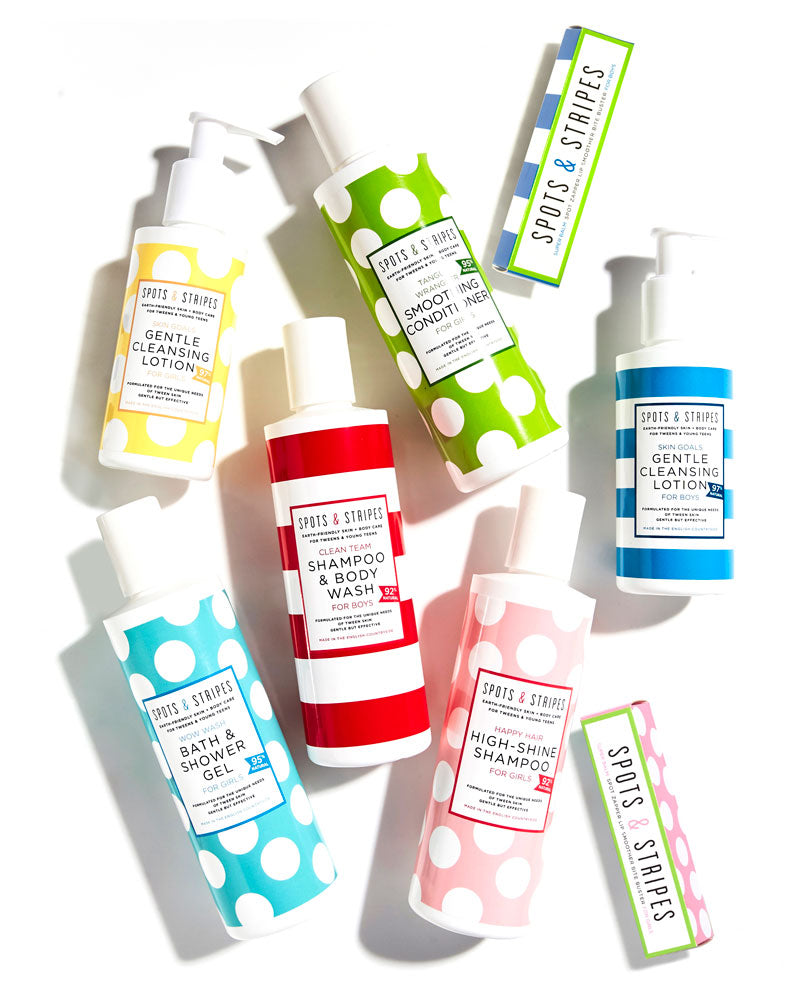
* Avoid foaming face washes. Even ‘gentle’ ones can be too harsh for tween skin. Our advice? Massage a small blob of our Gentle Cleansing Lotion into dry skin - t-zone only at this age - wipe it off with a clean damp flannel or one of our organic muslin cloths. It leaves the skin completely balanced, so you can go straight to step three, if you want to.
* The moisturising stage can be skipped for 8 to 9-year-olds, if you’re using a gentle cleanser. But if their skin needs it - ie it has a tendency for dryness and sensitivity - smooth on our Featherlight Moisturiser or give the face a quick spritz with our Hydrating Face Mist (very popular with boys who don’t want fuss).
* In the am from March to October, finish with our Sun Squad Sensitive Skin SPF30 for Face. A forever habit, even on cloudy days.
Evening: Clean off the day
* Cleanse again with our Gentle Cleansing Lotion - t-zone only - and moisturise if needed. That’s it. If a couple of tiny blemishes show up, treat them with our Super Balm (which is also brilliant for chapped lips or patches of dry skin, so common in tweens).
Note: if their skin is completely baby, do the night time cleanse only for starters. Then graduate to morning and night as they get older.
Body-care Basics
The same goes for their bodycare. Physical changes might not be visible yet, but building a simple routine matters now, particularly if they’re in charge of their own bath times.
Wash smart, not harsh
When they were younger, they might have been able to skip a wash. But now, a daily bath or shower will keep their body skin’s microbiome happy and odour-causing bacteria in check. Avoid old-school alkaline soaps and choose sulphate-free body washes that clean tween skin gently, without stripping or drying it. Our Body Washes and Shower Gels are as gentle as their baby/child products, but have the clever ingredients - anti-bacterial, anti-fungal! - they need when they’re growing up. Fresh underwear and tees/vests daily are now non-negotiables.
Deodorant if they need it
Many won’t need it yet. But If underarm smell starts, introduce an aluminium-free deodorant (like Spots & Stripes All-Natural Deodorant which is specially formulated for tweens and teens) on clean, dry skin. Our recommendation is to leave it in their underwear drawer, or beside their bed at night. Then it’s hard for them to forget to put it on!
Hair care
Gentle rhythms
Moving towards puberty can mean switching up their hair washing regimes, too. Look to wash their heads 2 to 3 times a week with a mild, sulphate-free shampoo. This is the time when regular shampoos can suddently cause dryness and flakes. If roots look greasy earlier than expected, increase the wash frequency gradually. And warm (not hot) water is always best.
When to get extra help
If rashes, eczema flares or persistent early breakouts appear — or if odour worries don’t respond to gentle washing and deodorant — check in with your GP/dermatologist.
You can find out more about our Skincare, specially formulated for skin from age 8 upwards here. And our Body care and Hair care.